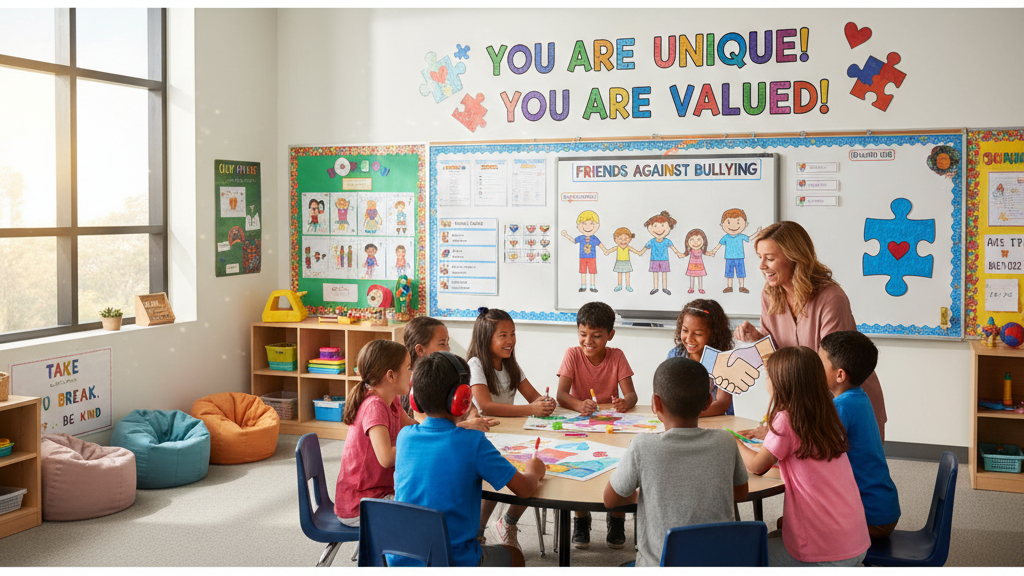
Every October, communities across the country recognize National Bullying Prevention Month, an initiative dedicated to raising awareness about the harmful effects of bullying and promoting strategies to build safer, more inclusive environments. For children with autism, this month carries particular importance. Research shows that students on the autism spectrum are at a higher risk of being bullied compared to their peers, making it crucial for families, schools, and professionals to work together in fostering understanding, acceptance, and respect.
The Connection Between Autism and Bullying
Children with autism often face unique challenges in communication, social interactions, and sensory processing. While these differences should be celebrated as part of each child’s individuality, they can sometimes make children more vulnerable to bullying. Misunderstandings, lack of awareness, and limited peer education about autism often contribute to negative experiences in schools and community settings.
Bullying can take many forms—verbal teasing, social exclusion, physical intimidation, or even digital harassment. For children with autism, these experiences can be especially damaging, impacting not only their emotional well-being but also their ability to focus, learn, and thrive academically. That’s why it is so important to pair autism awareness with bullying prevention efforts, particularly during this month of nationwide advocacy.
Why Awareness Matters
Awareness is the first step in creating safe environments. When educators, parents, and peers better understand autism, they are more likely to show empathy and support. Increasing awareness during National Bullying Prevention Month provides a valuable opportunity to highlight the strengths of children with autism while also addressing the need for inclusive practices in schools and communities.
At Verbal Behavior Associates (VBA), our mission is to empower children with autism and related developmental disorders through individualized, evidence-based services rooted in Applied Behavior Analysis (ABA). By combining professional expertise with a compassionate approach, we help children develop skills that promote independence and resilience—tools that are essential when navigating social challenges, including bullying.
How Families Can Support Their Children
Parents and caregivers play a central role in preparing children for social situations and addressing concerns about bullying. Here are some strategies families can use:
- Open Communication: Encourage your child to share daily experiences, whether positive or challenging. Establishing trust helps children feel safe when discussing sensitive issues like bullying.
- Teach Social Skills: Role-playing different scenarios can help children practice responses to teasing or exclusion. At VBA, we integrate social skill-building into therapy to support real-world applications.
- Advocate in Schools: Collaborate with teachers, school staff, and administrators to ensure your child’s needs are understood and respected. Requesting specific supports or accommodations can make a significant difference.
- Build Confidence: Focusing on your child’s strengths and celebrating successes can increase self-esteem, making them more resilient in the face of adversity.
How Educators Can Foster Inclusion
Schools are essential partners in bullying prevention, particularly for students with autism. Teachers, administrators, and staff can create environments where all students feel valued by implementing the following practices:
- Educate Peers: Age-appropriate lessons about diversity and inclusion can reduce stigma and encourage empathy among students.
- Promote Positive Behavior: Reinforcing kindness, respect, and cooperation helps establish a school culture that discourages bullying.
- Provide Clear Support Plans: Developing Individualized Education Programs (IEPs) or behavior intervention plans that address bullying concerns ensures children receive consistent guidance and protection.
- Encourage Bystander Action: Empower students to safely stand up for peers with autism if they witness bullying.

The Role of ABA in Supporting Children
Applied Behavior Analysis is widely recognized as one of the most effective approaches for helping children with autism learn new skills and build resilience. At VBA, our team of highly trained Board Certified Behavior Analysts (BCBAs) and therapists provide individualized support that helps children develop communication, social, and coping skills. These skills are not only essential for personal growth but also provide children with tools to navigate challenging situations, including bullying.
For example, ABA therapy may help a child learn how to respond when faced with teasing, how to initiate and maintain positive peer interactions, or how to advocate for themselves in social situations. By empowering children with these skills, we reduce vulnerability and promote confidence, making them better equipped to thrive in school and community environments.
Community-Wide Efforts
Bullying prevention requires a collaborative approach. Families, schools, and service providers must work together to create consistent, supportive environments. Community-wide events during National Bullying Prevention Month—such as awareness campaigns, workshops, and classroom activities—can further reinforce the importance of empathy and inclusion.
VBA partners with families and educators across California, offering services in regions including San Diego, Orange, Riverside, Los Angeles, and the East Bay. By working closely with local schools and communities, we strive to extend the benefits of ABA therapy beyond the home, ensuring that children with autism have the support they need wherever they go.
Taking Action This October
National Bullying Prevention Month is an ideal time to reflect on the importance of kindness, respect, and acceptance for all children. For families of children with autism, this month is a reminder that while challenges may exist, there are resources and strategies available to support growth and well-being.
At VBA, we are committed to raising awareness and providing practical solutions that make a difference in the lives of children and their families. Together, we can create environments where children with autism are not only protected from bullying but also celebrated for their unique strengths.
Contact Us
If you are looking for guidance, support, or services to help your child with autism thrive during and beyond National Bullying Prevention Month, we are here to help. Contact us today to learn more about our individualized ABA therapy programs and how we can partner with your family or school.