
Autumn brings a unique blend of colors, textures, scents, and sounds that make it a perfect season for sensory-based learning. For children in Applied Behavior Analysis (ABA) programs, sensory play can be a powerful way to encourage engagement, build communication skills, and promote self-regulation. By incorporating seasonal themes, therapists and parents can make ABA activities even more motivating and meaningful.
This guide explores autumn-themed sensory play ideas that can be adapted for different skill levels and goals, providing fun, structured opportunities for growth and learning.
Why Sensory Play Matters in ABA
Sensory play involves activities that stimulate one or more of the senses—sight, sound, touch, taste, and smell. For children with autism, these activities can:
- Support sensory processing skills
- Encourage communication and social interaction
- Improve fine and gross motor abilities
- Promote focus and attention
- Provide calming or alerting sensory input
When used intentionally in ABA programs, sensory play can also help teach new skills by pairing motivating activities with targeted learning objectives.
Autumn Sensory Bin Ideas
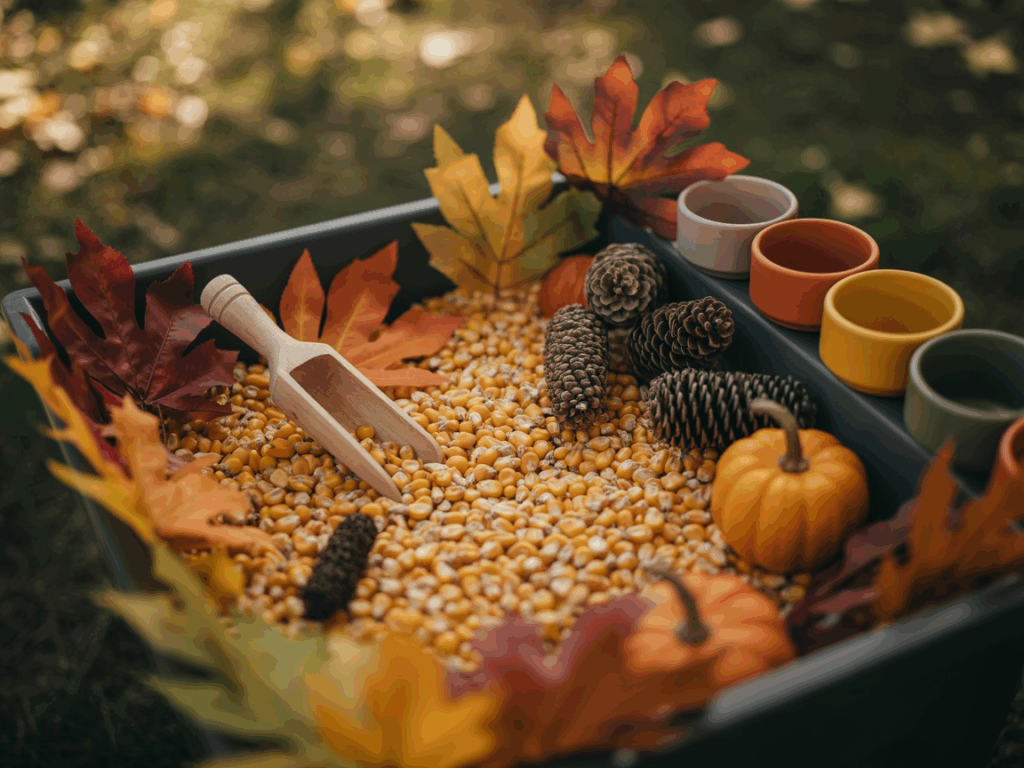
Sensory bins are a versatile and customizable activity that can incorporate many autumn themes. Fill a bin with seasonal materials and encourage your child to explore while practicing ABA program goals.
1. Leaf and Acorn Bin
- Fill with real or fabric leaves, acorns, and pinecones
- Add measuring cups or small containers for scooping and pouring
- Embed small toys or picture cards to encourage searching and labeling
Target skills: Vocabulary building, following directions, fine motor coordination
2. Pumpkin Patch Bin
- Use dried corn kernels or orange-colored rice as the base
- Add small foam or plastic pumpkins
- Include tongs or spoons to practice grasping and transferring
Target skills: Counting, color identification, motor planning
Autumn Art and Craft Activities
1. Leaf Rubbings
Place leaves under a sheet of paper and have the child rub crayons over the top to reveal the patterns. This tactile and visual activity promotes creativity and fine motor skills.
Target skills: Imitation, requesting materials, shape and texture recognition
2. Pumpkin Painting
Instead of carving pumpkins, use paint, stickers, or foam shapes for decoration. This allows for sensory exploration without sharp tools.
Target skills: Turn-taking, expressive language, following multi-step directions
Nature-Based Sensory Walks
Taking ABA sessions outdoors in the fall can open up countless sensory opportunities. Encourage your child to notice what they see, hear, and feel.
- Collect colorful leaves and sort them by size or color
- Listen for birds, crunching leaves, or wind in the trees
- Feel tree bark, smooth stones, or soft moss
Target skills: Observation, descriptive language, categorization
Fall-Themed Sensory Play for Regulation
Some sensory activities can be particularly helpful for calming and self-regulation—important skills for ABA programs.
1. Warm Apple Scented Playdough
- Make homemade playdough with cinnamon or apple pie spice
- Provide cookie cutters and rolling pins
Target skills: Requesting help, tactile tolerance, creative play
2. Cozy Blanket Fort
- Create a small, dimly lit space with blankets and pillows
- Add a flashlight and seasonal books for quiet time
Target skills: Self-soothing, independent play, turn-taking with siblings or peers
Incorporating ABA Strategies into Sensory Play
To make the most of sensory activities, integrate ABA teaching methods such as:
- Prompting – Offer support as needed and fade prompts over time to encourage independence
- Reinforcement – Pair sensory play with praise or other preferred items for completing tasks
- Task analysis – Break activities into smaller, teachable steps
- Data collection – Track progress on specific goals, such as labeling objects or following instructions
Safety Considerations
When planning sensory activities, always consider safety:
- Use non-toxic, washable materials
- Supervise children closely with small items to prevent choking
- Adapt activities for sensory sensitivities, avoiding textures or scents that may be overwhelming
Bringing Autumn Indoors
If outdoor play isn’t possible, bring fall indoors by creating themed stations:
- A “mini pumpkin market” for pretend play
- A leaf-sorting station with real or artificial leaves
- A fall-themed sensory table with corn, beans, or sand
Final Thoughts
Autumn offers a rich sensory landscape for children in ABA programs. Whether indoors or outdoors, these seasonal activities can be tailored to support skill-building, encourage communication, and create joyful learning experiences. By combining ABA strategies with engaging sensory play, parents and therapists can make the most of the season’s opportunities.
Contact us to learn how our ABA services can incorporate seasonal sensory play into your child’s program.